Welcome back to our design series, where we’re exploring how to create spaces that feel beautiful, comfortable, and enduring. In this series, we’ve been summarizing each chapter of the incredibly influential book, Patterns of Home: The Ten Essentials of Enduring Design by architects Max Jacobson, Murray Silverstein, and Barbara Winslow. If you don’t already own a copy, we highly recommend purchasing one to explore these concepts in depth. Today, we’re diving into Chapter Eight: Refuge and Outlook—a pattern that taps into a fundamental human desire: the feeling of being completely safe and protected while still enjoying a beautiful view of the world beyond [4, 58].
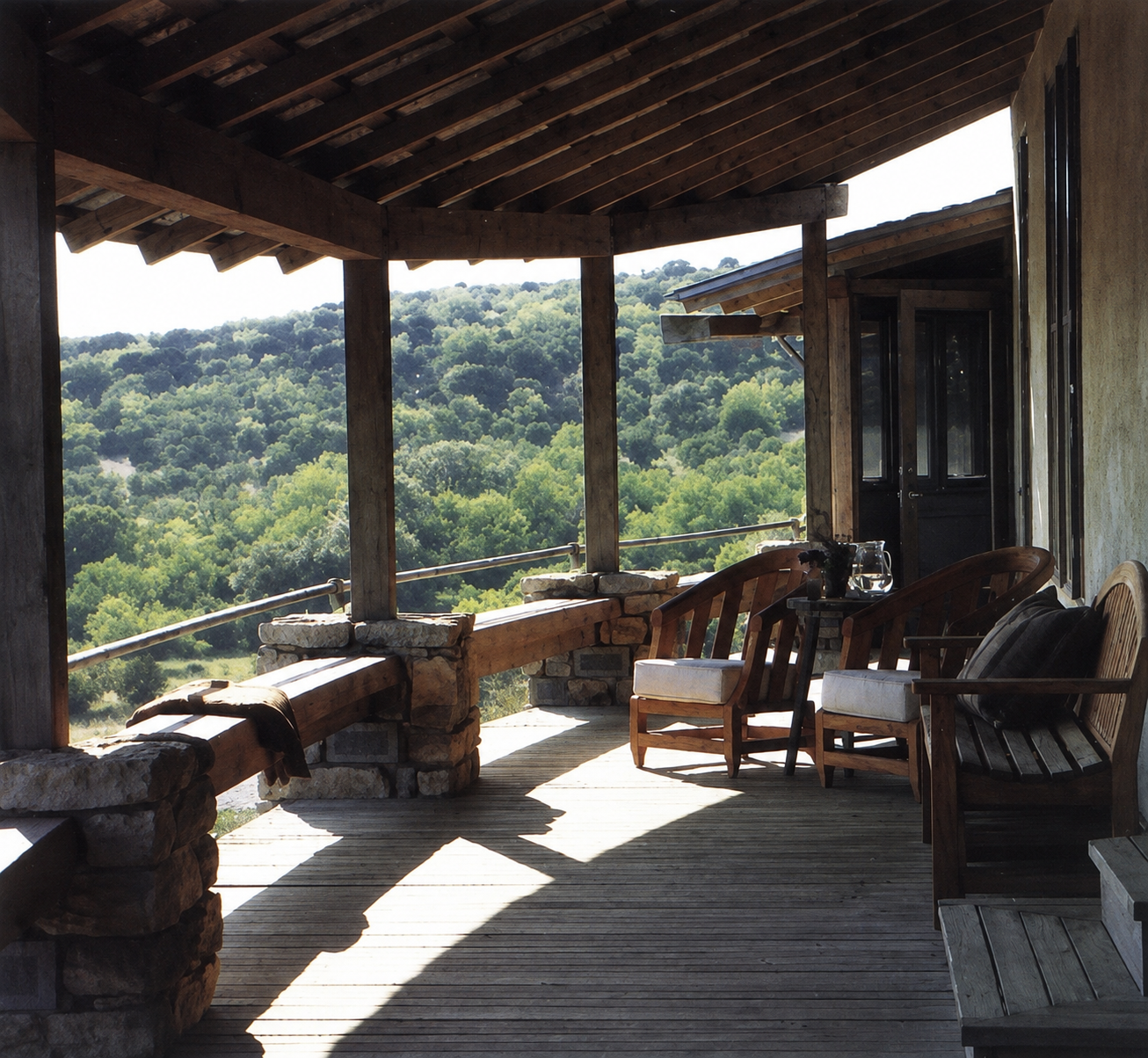
Above featured image: AI-replicated image of a photo from the book Patterns of Home: The Ten Essentials of Enduring Design, Chapter 8: Refuge and Outlook.
Have you ever wondered why children love to build blanket forts under tables, or why cats always curl up in cardboard boxes placed high on a shelf [60]? Or why, on a rainy day, there is nothing quite as comforting as sitting by a crackling fire while looking out a large window at the storm [58]?
This is the magic of Refuge and Outlook at work. One of the fundamental pleasures that a house can offer is being “in” while looking “out”—providing a solid, stable, and protected place (the refuge) from which you can look out toward and over a larger “beyond” (the outlook) [4, 58].
The Psychology of Comfort and Security
This pattern goes far deeper than modern aesthetics; it speaks directly to our core psychological need for emotional comfort. Grant Hildebrand, an architectural professor at the University of Washington, has studied this phenomenon for years [59]. He points out that we find a profound sense of pleasure and peace in spaces that satisfy two complementary desires: the need to feel tucked away in a secure, protected space, and the need to have a clear, open view of what is happening around us [59, 61]. When a home achieves this, it allows us to relax and observe our surroundings without feeling exposed [59].
Architects have long used this concept to design some of history’s most iconic homes. For instance, Frank Lloyd Wright placed the main living areas of his famous Prairie houses on the second story, well above street level, and set the rooms back from a low-walled patio or terrace [59, 60]. This allowed families to look out over the street life below from a position of complete security and privacy—passersby simply couldn’t see inside [59, 60].
The Four Pillars of Refuge and Outlook
To successfully bring this pattern into your own home, the authors of Patterns of Home outline four key design strategies to balance security with prospect:
- Thick and Massive Enclosures (The Refuge): Your areas of retreat should feel structurally solid [62]. This can be achieved by using thick, massive walls, a solid back to sit against, lower ceilings, and darker, richer materials [62, 68].
- Lower Light Levels (Lower Visibility): A perfect refuge keeps you less visible from the brighter outer world [62]. By keeping the light levels in your retreat lower, using deep overhangs, or placing screening plants and shades, you can comfortably observe your surroundings without feeling exposed [62].
- An Elevated Vantage (The Outlook): To maximize your perspective, try to position your areas of refuge slightly above the level of the view beyond [62]. Elevating the space—even by just a few steps—creates a commanding, watchful overlook of the landscape or the rooms below [62].
- All-Weather Climate Tempering: The best spaces protect you from the elements so you can enjoy them year-round [62]. Think of a deep, covered porch that offers summer coolness, or a sunlit bay window that provides winter warmth while you watch the weather outside [62].
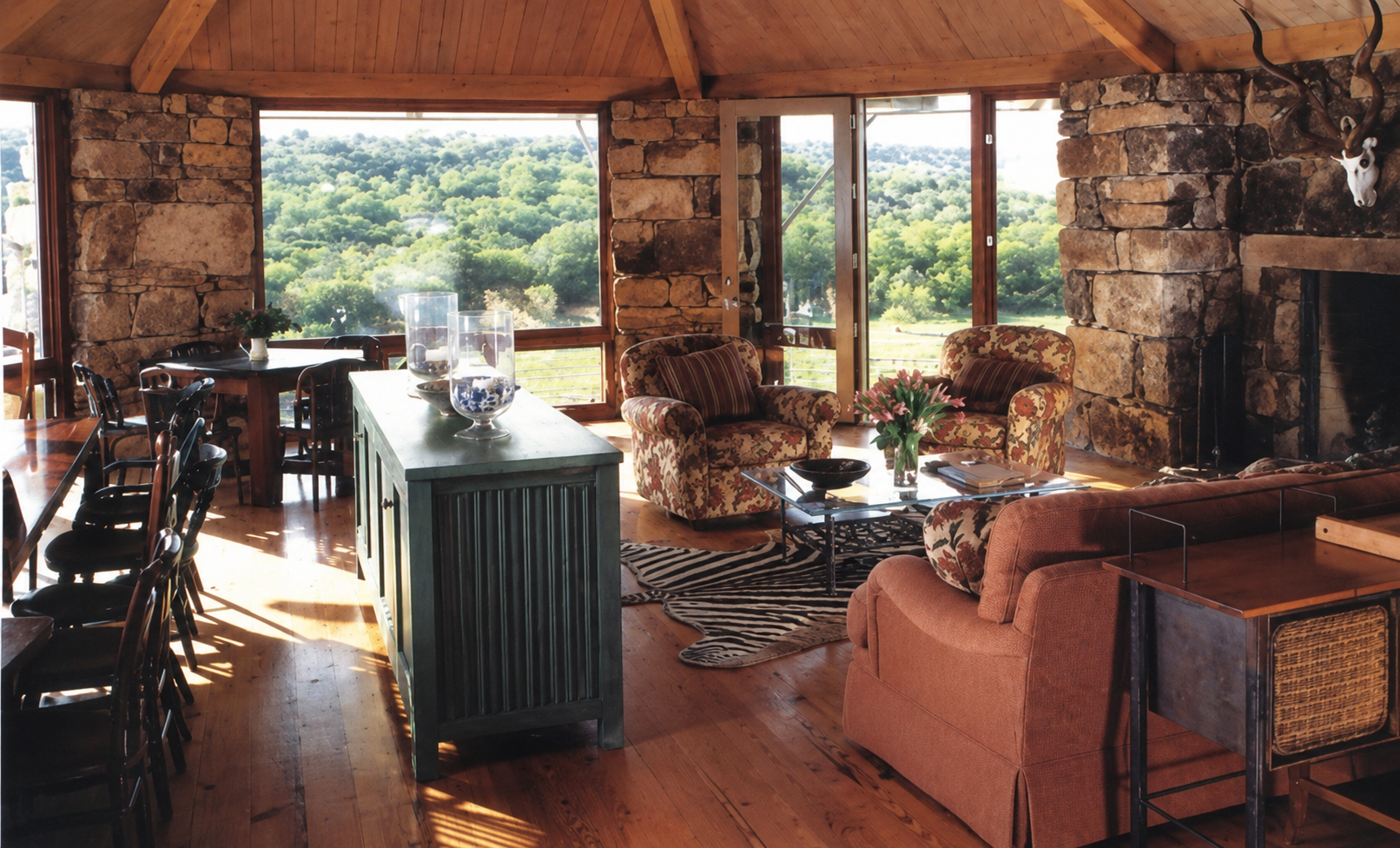
AI-replicated image of a photo from the book Patterns of Home: The Ten Essentials of Enduring Design, Chapter 8: Refuge and Outlook.
Applying the Pattern at Every Scale
What makes this pattern so beautiful is its versatility. You can apply it at multiple scales throughout your home’s design:
- Siting the House (The Big Picture): When placing your home on its site, you can position the building to act as a giant refuge [66]. For example, architect Bernie Baker designed a home on a windy Puget Sound slope by digging the front entry side into the hill (creating a secure, grounded back) and elevating the rear living areas on a raised terrace platform to capture spectacular, panoramic views of the water [66].
- Indoor Room Layouts (The Medium Scale): You can organize your floor plan so that the most public, open activities (like formal living and dining) are positioned right up against large window walls or porches [78]. Meanwhile, more private spaces (like the kitchen or a breakfast area) are tucked deeper into the house [78]. From the refuge of the open kitchen deep in the heart of the house, you can look through the open living areas, out the windows, and into the landscape beyond [78].
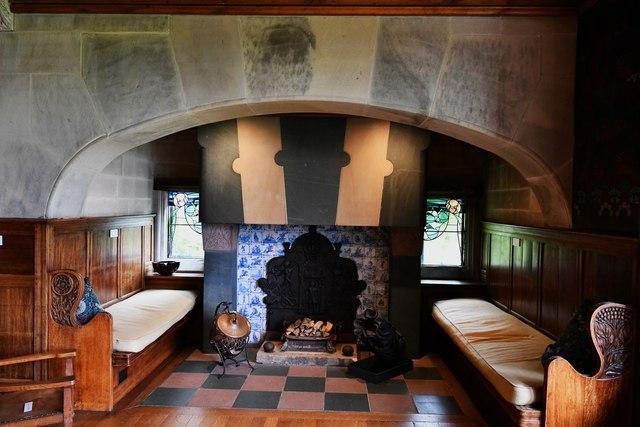
- Cozy Architectural Details (The Small Scale): This is where you can have a lot of fun with built-ins [4, 50]. Cozy window seats, recessed bed alcoves with solid backs, or private fireplace inglenooks tucked just off a large living room are all perfect ways to create private, intimate pockets of refuge that still let you overlook the social hub of the home [4, 50].
© Copyright Michael Garlick and licensed for reuse
Let’s Build Your Perfect Sanctuary
A truly comfortable custom home is all about balance [92]. If a house has too much outlook, it can feel like living in a glass fishbowl—exposed and unsettled. But if it has too much refuge, it can feel dark and claustrophobic [92]. The perfect home provides a harmonious balance of both: a safe harbor that still opens your eyes to the beauty of the world around you [92].
If you are ready to design a home in Southern Illinois that perfectly balances cozy, secure retreats with beautiful, sweeping views, the team at Jack Home Construction is here to bring your vision to life.
To explore more of the ten essentials of enduring home design, check out our previous posts in the Designing Your Home Series, and stay tuned as we cover Pattern Nine next!
Call us today at 618-995-2288