Welcome back to our home design series! Today, we are wrapping up our multi-part journey through the classic architectural book, Patterns of Home: The Ten Essentials of Enduring Design by architects Max Jacobson, Murray Silverstein, and Barbara Winslow [25]. If you’ve been following along or are just starting your own custom build or remodel in Southern Illinois, we highly recommend picking up a copy to explore all these concepts in full detail.
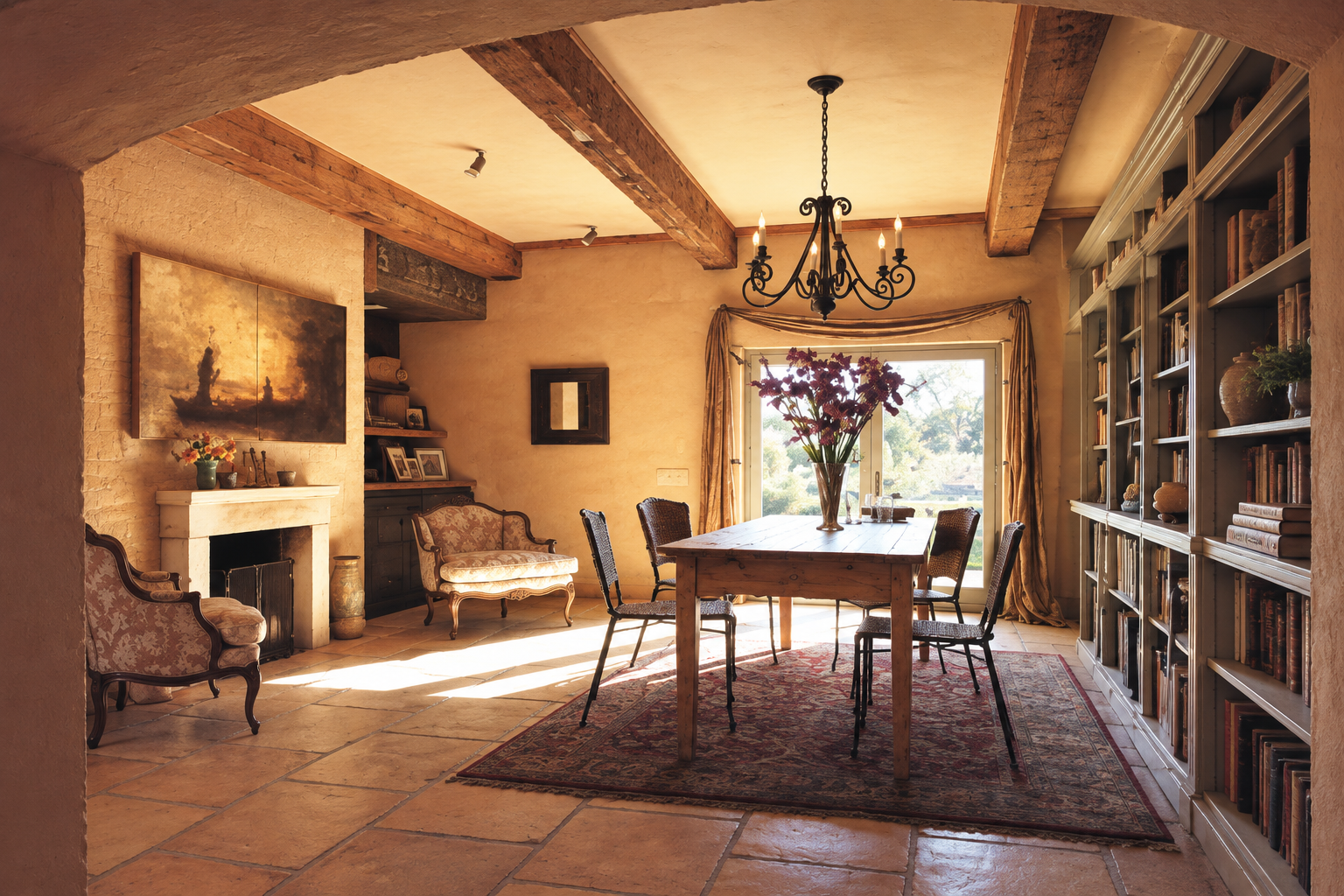
Above featured image: AI-replicated image of a photo from the book Patterns of Home: The Ten Essentials of Enduring Design, Chapter 10: Composing With Materials.
In this final installment, we are diving into Chapter Ten: Composing with Materials. This pattern brings all the abstract floor plans and spatial ideas down to earth, focusing on how you choose, combine, and display the actual physical materials that make up your house—from timber, stone, and brick to concrete, glass, and metal finishes [25, 61, 62].
Designing a floor plan with great traffic flow and sunny windows is a crucial start, but a house only comes to life when it gets built out of physical materials. How those materials are selected, combined, and installed by your builder is what determines whether a home feels cheap and sterile or warm, sturdy, and crafted to last for generations [25, 61, 62].
In Chapter Ten, the authors emphasize a truth that every experienced builder knows by heart: there is no such thing as an inherently “good” or “bad” building material [62]. Standard concrete, corrugated metal, and simple plywood can look incredible, while expensive marble can look cold and out of place [62, 63]. What truly matters is how you assemble them, how you let each material show off its natural texture, and how you pair them with contrasting elements [62, 64, 65].
As custom builders, this is where craftsmanship really shines. Here are four practical building strategies we use to compose materials and give your home lasting character:
1. Pair Rough Textures with Smooth Finishes
One of the easiest ways to make a room feel rich and inviting is to place contrasting textures side by side [64, 65]. If every surface in a room is smooth white drywall, the space can feel flat and lifeless [64, 81]. But when you place a rough-sawn timber beam or a natural fieldstone fireplace directly against a crisp, smooth drywall surface, both materials instantly pop [64, 81]. The rough material feels more rugged and authentic, while the smooth surface looks cleaner and more refined [64, 66, 78].
2. Show Off How the House is Put Together
In modern construction, builders often try to hide every joint, nail, and structural connection behind layers of caulk, trim, or drywall [65, 88]. But there is immense beauty in letting a house show its structural bones [65, 67, 86]. Highlighting visible post-and-beam connections, leaving heavy roof trusses exposed overhead, or adding a chamfered (beveled) top edge to a concrete foundation wall explains to the eye how the home is built [65, 67, 77, 86]. It gives the home a sense of honesty, strength, and structural integrity [77, 86].
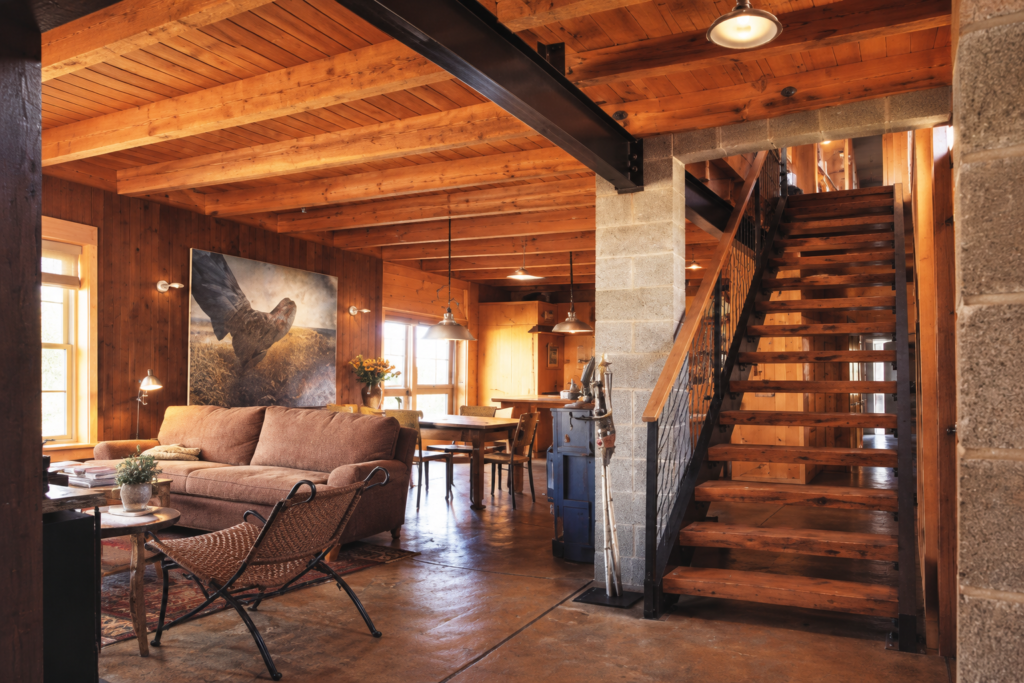 Above featured image: AI-replicated image of a photo from the book Patterns of Home: The Ten Essentials of Enduring Design, Chapter 10: Composing With Materials.
3. Choose Materials That Age Gracefully
Building a custom home is a long-term investment, so you want to choose materials that wear in—not wear out [61, 66]. Materials like cedar shingles, natural oak flooring, copper flashing, and stone take on a rich patina over time as they weather in the sun and rain [66]. Rather than deteriorating, they gain character and tell the story of the home [66]. When picking finishes, look for natural materials that develop beauty with age instead of synthetic surfaces that peel or crack [61, 66].
4. Use Materials in Creative, Unexpected Ways
Don’t be afraid to break traditional rules and bring materials into new contexts [67, 71]. For example, bringing a rugged exterior material indoors—like continuing an exterior brick or stone wall right through the foyer—creates a seamless connection to the outdoors [67, 71, 87]. On a smaller scale, you can bring fun functionality to a room, such as installing a green chalkboard wainscoting in a kid’s bedroom so they can draw on the walls without ruining the paint [99, 101]!
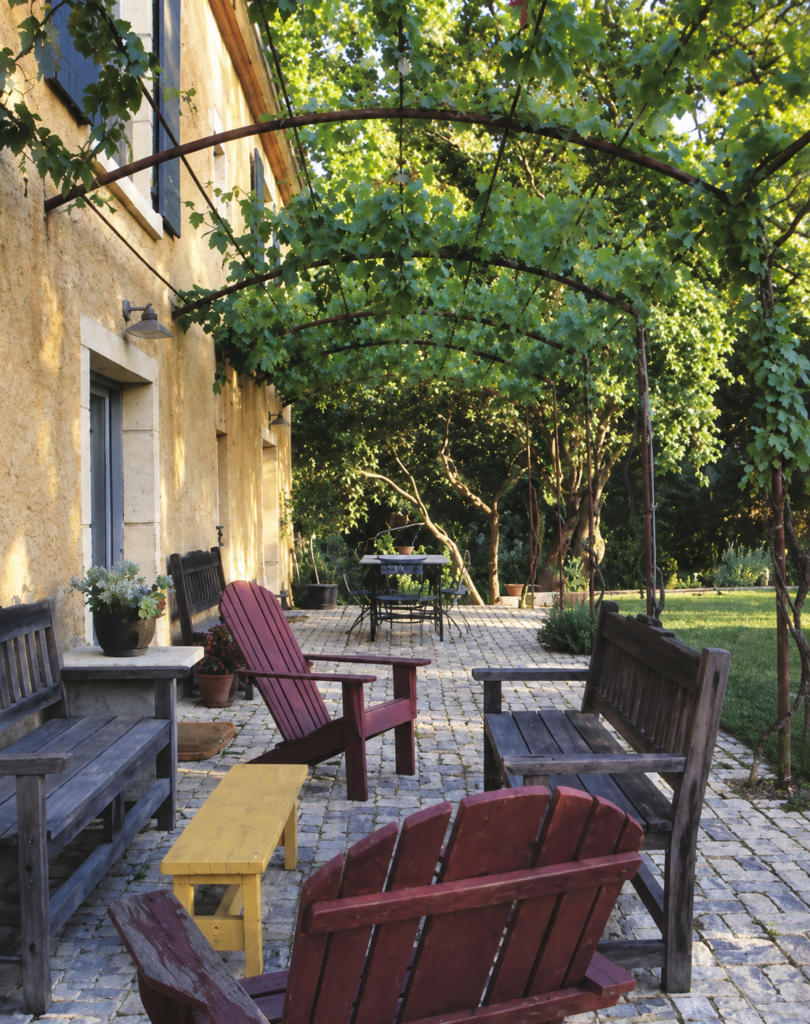 Above featured image: AI-replicated image of a photo from the book Patterns of Home: The Ten Essentials of Enduring Design, Chapter 10: Composing With Materials.
“The apparent strength and solidity of the earthen walls is intensified by the open delicateness of the overhead grape trellis” (Patterns of Home, p. 256).
Heavy Foundations Meet Warm Timber
Throughout Chapter Ten, the authors highlight how powerful it is to contrast heavy, earth-bound materials with light, warm finishes [68, 72]. When we build a house with a thick stone or concrete masonry base, it grounds the home and makes it feel anchored to the land [68, 72]. Pairing that heavy base with warm Douglas fir ceiling joists, tongue-and-groove wood paneling, or polished hardwood floors keeps the interior from feeling like a cave [72, 81]. The heavy stone provides security, while the warm wood brings comfort and life [72, 81].
Rustic Meets Refined: Bringing Craftsmanship Forward
You don’t need a massive budget to make a statement with materials; you just need thoughtful detailing [74, 76, 78]. A great technique is combining raw, rustic site materials with clean, precise finish carpentry [74, 76]. For instance, using rough-barked cedar posts to support a front porch overhang right next to smooth, tight-fitted board-and-batten siding creates an eye-catching contrast [76]. The raw log reminds you of nature, while the tight joinery shows off the carpenter’s skill [76, 78].
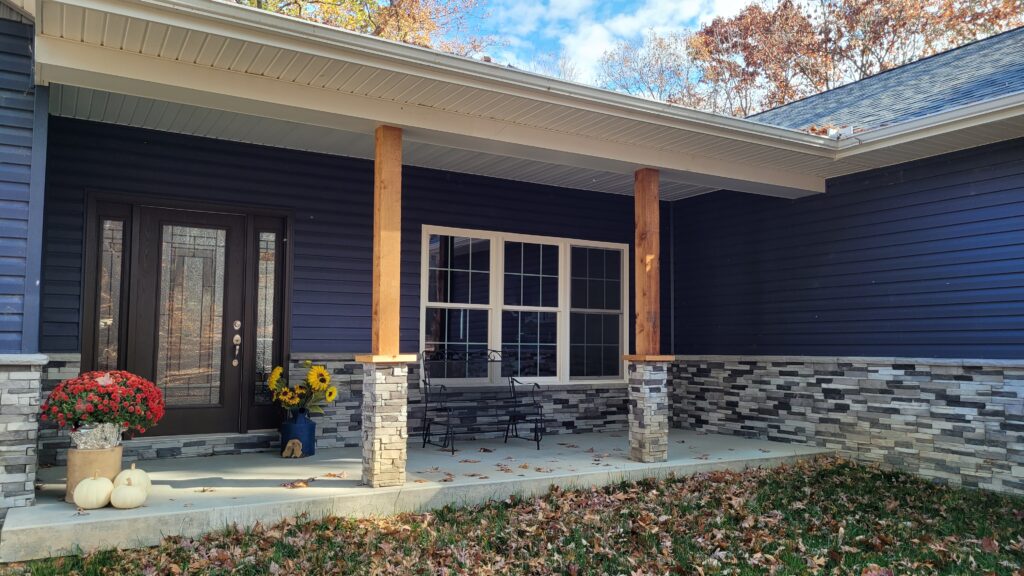 Rustic front porch posts contrasting with traditional lap siding:
a Jack Home Construction Build, Navy Blue Home At The Peninsula
Bringing It All Together: Your Complete Home Design Journey
Over the course of this ten-part series, we’ve covered the fundamental building blocks of enduring home design:
- Inhabiting the Site – Placing your home to honor the land and capture views.
- Creating Rooms, Outside and In – Treating outdoor patios and courtyards with the same care as indoor rooms.
- Sheltering Roof – Designing roofs that wrap your home in protection and style.
- Capturing Light – Washing rooms in natural sunlight from multiple directions.
- Parts in Proportion – Balancing room heights, windows, and wings into a harmonious whole.
- The Flow Through Rooms – Creating smooth, welcoming circulation paths that don’t disrupt quiet spaces.
- Private Edges, Common Core – Balancing lively family gathering hubs with cozy, claimable nooks.
- Refuge and Outlook – Pairing secure, comfortable retreats with broad views of the horizon.
- Places in Between – Building transitional porches, sunrooms, and window seats that bridge indoor and outdoor living.
- Composing with Materials – Selecting and contrasting raw timber, stone, metal, and glass to create lasting beauty.
At Jack Home Construction, we don’t just build houses—we craft homes that are tailored to your family’s lifestyle and built to withstand the test of time. Whether you are starting with a blank parcel of land in Southern Illinois or planning a major custom remodel, we are passionate about turning these timeless design principles into reality.
Thank you for reading along with us throughout our Designing Your Home Series! If you’re ready to start building your own dream home, reach out to Jack Home Construction today—let’s build something beautiful together.
Call us today at 618-995-2288